Garden sauna · score 8.9
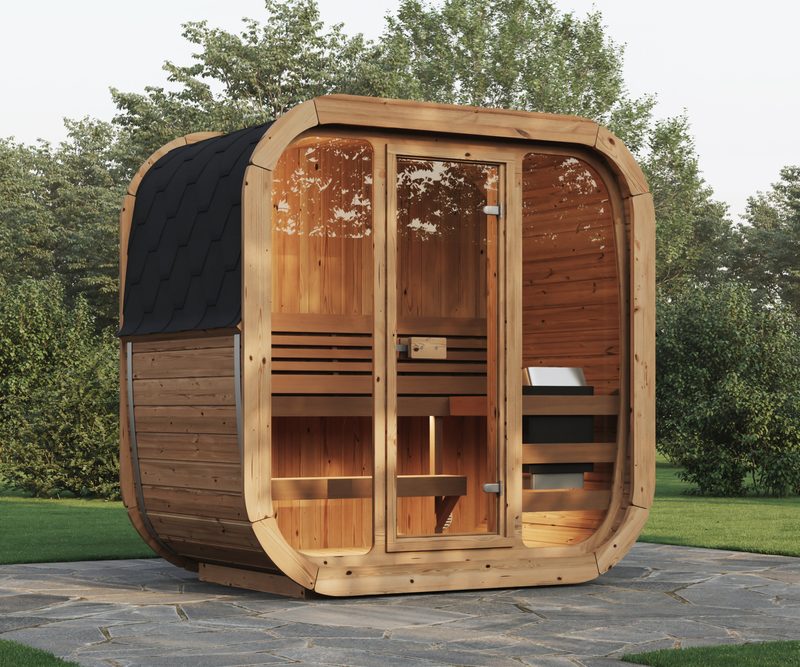
Polar Recovery Sauna Cube 3-5 Person
Wooden Front
New circuit (32 A) 3-5 people · £6,000 ready to use
Guide
Temperature, running cost, power supply and price compared, from the sellers' published specs.
If you buy through a link on this page we may earn a commission, at no cost to you. It never changes our rankings: how we make money.
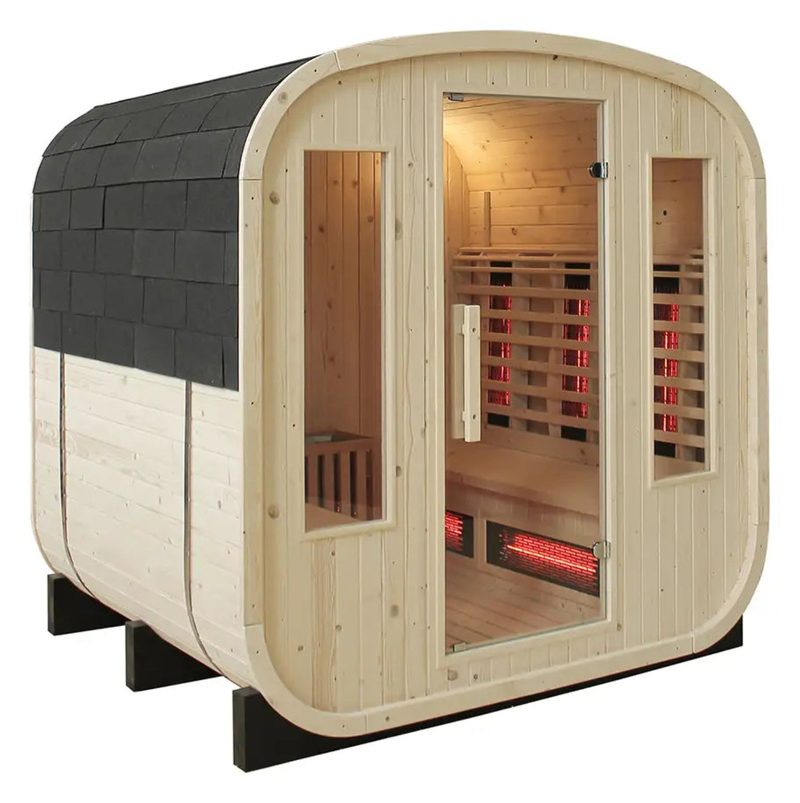
An infrared sauna runs cooler, around 60°C, and the small ones plug into a normal socket. A traditional sauna heats the air to 80°C or more with a stove and stones you can pour water on, and almost always needs a new circuit or a wood burner.
| Infrared | Traditional | |
|---|---|---|
| Top temperature (published) | 60 to 65°C (Steam & Oak Kajo 2, Polar Nova 2) | 80 to 100°C |
| Steam from water on the stones (the Finns call it ) | No | Yes, water on the stones |
| Power | 1.6 to 3.3 ; many plug in | 4.5 to 9 kW electric, or wood |
| Running cost a session (our estimate) | about £0.53 | about £1.97 at 6 kW |
| Where | Mostly indoors; a few outdoor cabins | Mostly outdoors |
Some people who find 80°C too hot prefer infrared's lower temperature. If you have a medical condition, ask your GP before using either.
See all infrared and indoor saunas or garden saunas.
It is one visit from a registered electrician. Every sauna page says what power it needs, and we add a typical cost to the price (£450 for a new circuit). 8 saunas we list plug into a normal socket, and 46 garden saunas take a wood stove with no electrics at all. Sauna electrics, explained →
The smallest garden saunas we list take 1.20 × 1.20 m, about the size of a garden shed. No garden at all? Infrared cabins fit in a spare room, and a cold plunge needs less than a metre square. Saunas for small spaces →
Garden sauna · score 8.9
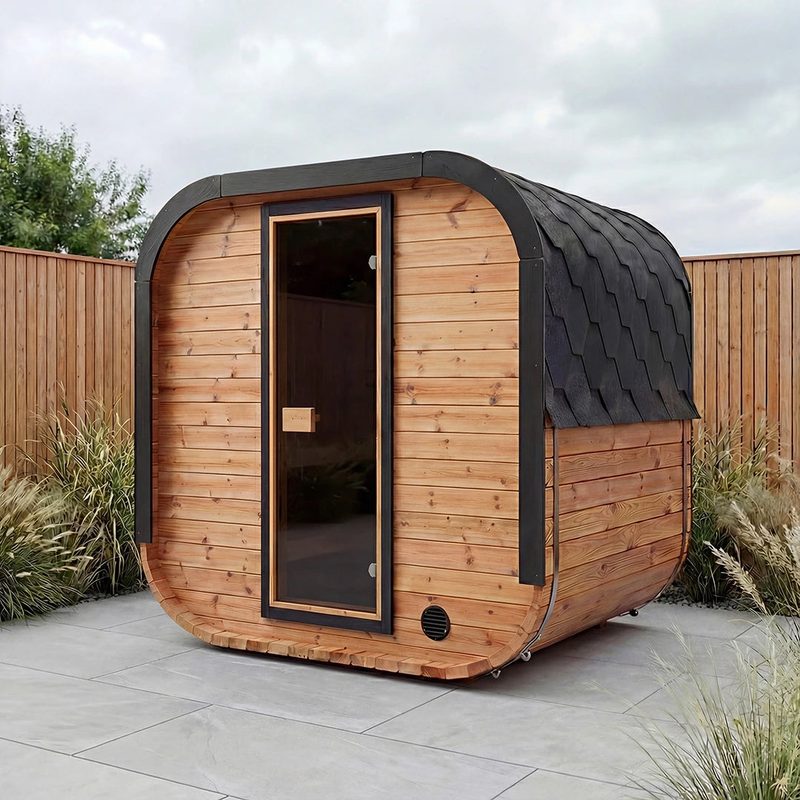
Wooden Front
New circuit (32 A) 3-5 people · £6,000 ready to use
Garden sauna · score 8.5
Harvia Wall 4.5
New circuit 2-3 people · £5,710 ready to use
Garden sauna · score 8.3
New circuit (32 A) 4-6 people · £5,500 ready to use